
History of the development of mulberry germplasm resources in Bulgaria
BULGARIA
Established in 1896, the Scientific Centre on Sericulture in Vratsa (SCS) has grown to become the largest centre in Bulgaria dedicated to the advancement of the sericulture industry. The Research Department at SCS comprises four specialised laboratories: the Mulberry Selection and Agronomy Laboratory, the Silkworm Genetics Laboratory, the Silkworm Selection and Egg Production Laboratory, and the Silkworm Rearing and Cocoon Processing Laboratory. These laboratories focus on a range of research activities, including genetic studies on breeding technologies for the development of new silkworm lines, breeds, and hybrids; technology for silkworm egg production; prevention of silkworm diseases and pest control; selection and cultivation of mulberry; cocoon and silk processing; as well as sericulture economics and management.
The SCS prides itself on maintaining an extensive collection of more than 200 mulberry varieties and over 70 silkworm strains and lines. These have been gathered from both domestic and international sources and are continuously bred to enhance their genetic traits. This comprehensive approach ensures that SCS remains at the forefront of sericulture research and development, contributing significantly to the industry's growth and sustainability.
In Bulgaria, mulberry has grown naturally since ancient times, and now the following species are available in the country: M. alba, M. indica (var. M. latifolia, M. bombycis, M. kagayamae, M. multicaulis), M. rubra and M. nigra. At the beginning of the 20th century, almost all the mulberry trees and plantations in Bulgaria were of the local ‘wild type’ variety, characterised by excellent adaptation to the climatic and soil conditions, but a low leaf yield. Twelfe mulberry varieties were introduced for the first time from Italy in 1930. After that mulberry varieties have been imported many times from the Soviet Union (in 1956; 1958; 1965; 1967), Japan (in 1963; 1970; 1974), Romania (1964), China (1967; 1982), Egypt (1998), Ukraine (1998) and Azerbaijan (2004).
For the enrichment of mulberry germplasm, SCS Vratsa has organised several field trips for collection of accessions. The exotic accessions imported from Italy and those collected in Bulgaria until 1932 were characterised and evaluated and the accessions N3, N21, N24, N26, N101, N106 and N112 were recommended for use at the field level. From indigenous accessions, collected in 1950 and 1953 the accessions N 59, N51, N33 and N53 having higher leaf yields were selected. In the period 1940-1950 several mulberry hybrids between the female varieties N24, N103, N106 and the male varieties N3, N21, N62, N112 were obtained. As the best combinations, N24 x N3, N103 x N3 and N106 x N3 were recommended.
During the period 1956-1967 the mulberry varieties ‘Kokusou 21’, ‘Kokusou 27’ and ‘Kinryu’ were introduced from Japan through Soviet Union. During this period further varieties N3, N24, N59, N101, N106, ‘Adreuli’, ‘Pobeda’, ‘Tbilisuri’ and ‘Kokusou 70’ were tested in the main sericulture regions of Bulgaria. The varieties N106, ‘Kokusou 70’, ‘Pobeda’ and ‘Tbilisuri’ gave the best results and were approved by the government for commercial sapling production.
During the period 1956-1967 the mulberry varieties ‘Kokusou 21’, ‘Kokusou 27’ and ‘Kinryu’ were introduced from Japan through Soviet Union. During this period further varieties N3, N24, N59, N101, N106, ‘Adreuli’, ‘Pobeda’, ‘Tbilisuri’ and ‘Kokusou 70’ were tested in the main sericulture regions of Bulgaria. The varieties N106, ‘Kokusou 70’, ‘Pobeda’ and ‘Tbilisuri’ gave the best results and were approved by the government for commercial sapling production.
In the period 1967-1977 the hybrid offsprings of the varieties ‘Georgia’, ‘Kinryu’, ‘Kokusou 20’, ‘Kokusou 27’, N24 and N106 under natural pollination were investigated. It was found that the offsprings of ‘Georgia’, ‘Kinryu’ and N24 had the largest percentage of unlobed leaves, 89%, 67 % and 63 % respectively. During the period 1976-1978 new local varieties ‘Vratsa 1’ and ‘Vratsa 18’ were selected at SCS Vratsa, tested and approved for commercial use.
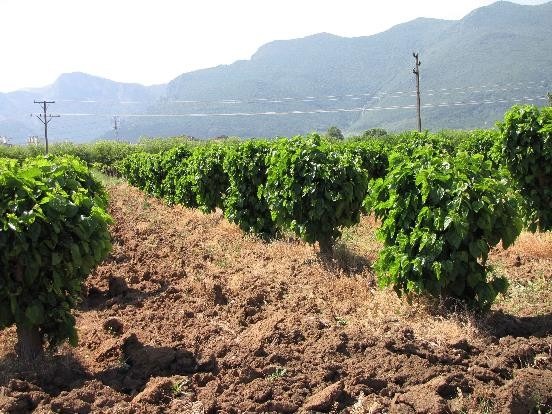
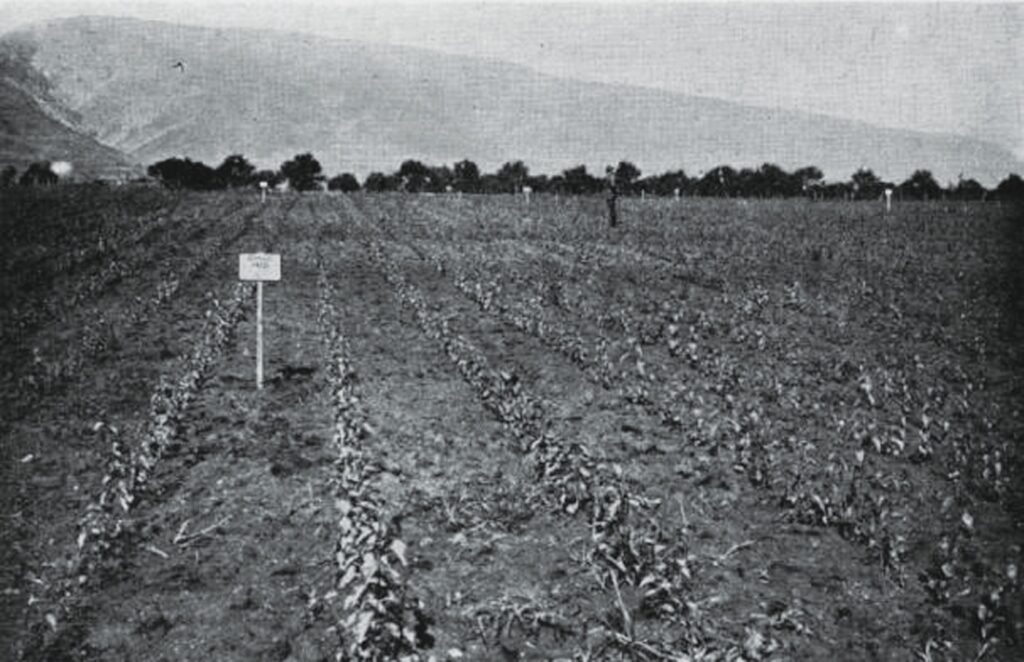
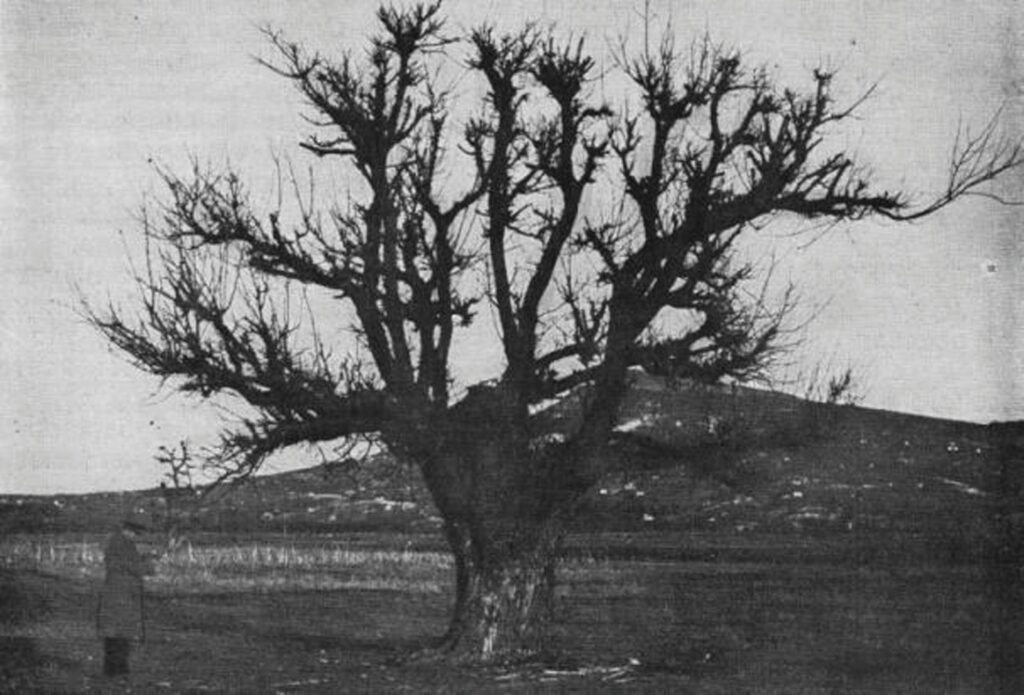
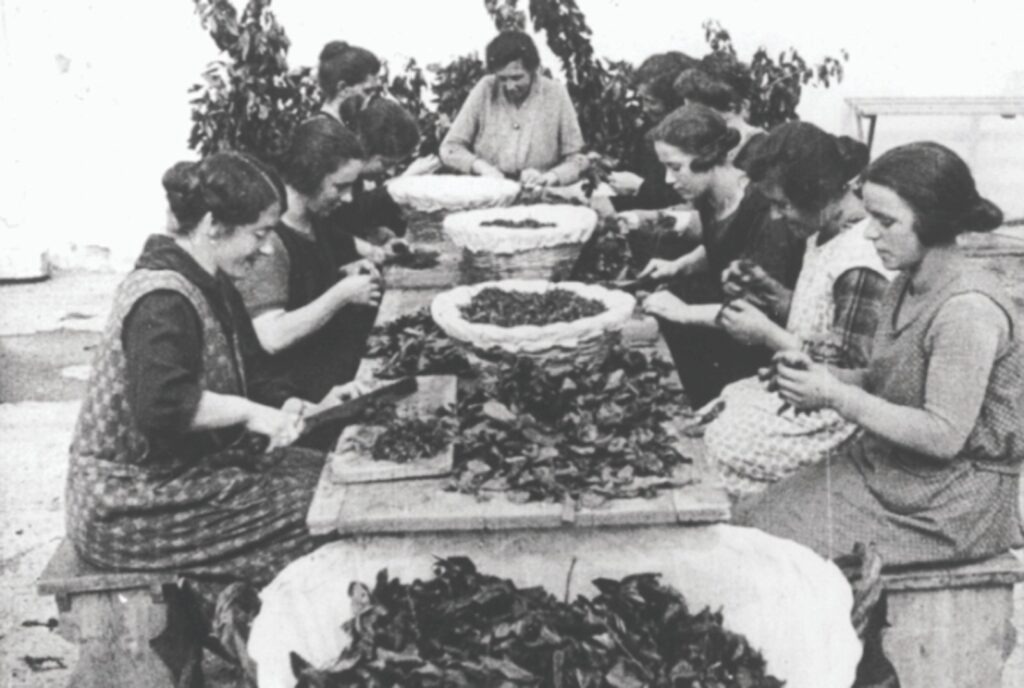
New mulberry accessions were created by using the methods of experimental polyploidy and hybridization. Penkov (1980) made a hybridisation between the accessions N3, N116, N118, and N120 belonging to the species M. alba and M. indica (M. kagayamae and M. latifolia). A high percentage of trees with unlobed leaves manifested in the hybrids N24 x N116 – 90 %, N117 x N3 – 85 %, and N119 x N3 – 75%. These hybrids were approved by the government as hybrid varieties (Hybrid 50, Hybrid 78 and Hybrid 96) for commercial use in 1980.
The research work completed in 1981 proved that the F1 mulberry offsprings had very high variation in leaf lobation type and the mother variety influenced the leaf lobation type in the progeny to a greater extent. The leaf size was inherited intermediately in F1.
In 1995 a methodology for characterisation and evaluation of mulberry accessions was developed by Petkov (1998). Now the research work on mulberry selection is considered a very important activity at SCS Vratsa. It is necessary to continue the collection of new mulberry varieties both exotic and indigenous. In the period of 1998 – 2005 more than 2500 hybrid seedlings have been obtained, planted and evaluated.
The future direction of the breeding work should be the so called ‘far’ hybridization between varieties from different geographical regions, different species and especially between varieties having different chromosome numbers. As a result of the breeding work the highly productive mulberry varieties ‘Vratsa 1’, ‘Vezletz’ and ‘Vratsa 18’ were selected at SCS Vratsa which could be of interest for introduction in other countries as well.