
History of the development of mulberry germplasm resources in Italy
ITALY
In Italy, the first species of mulberry to be introduced was Morus nigra, originating from present-day Iran and already known in Roman times. Morus alba arrived in Italy later, between the ninth and twelfth centuries, from the Far East, and saw significant expansion around the 15th century. The oldest available documentation attesting to the presence of Morus alba in Italy dates back to 1434. This species was then introduced simultaneously with the activation of the silk industry and spread quite rapidly throughout Italy.
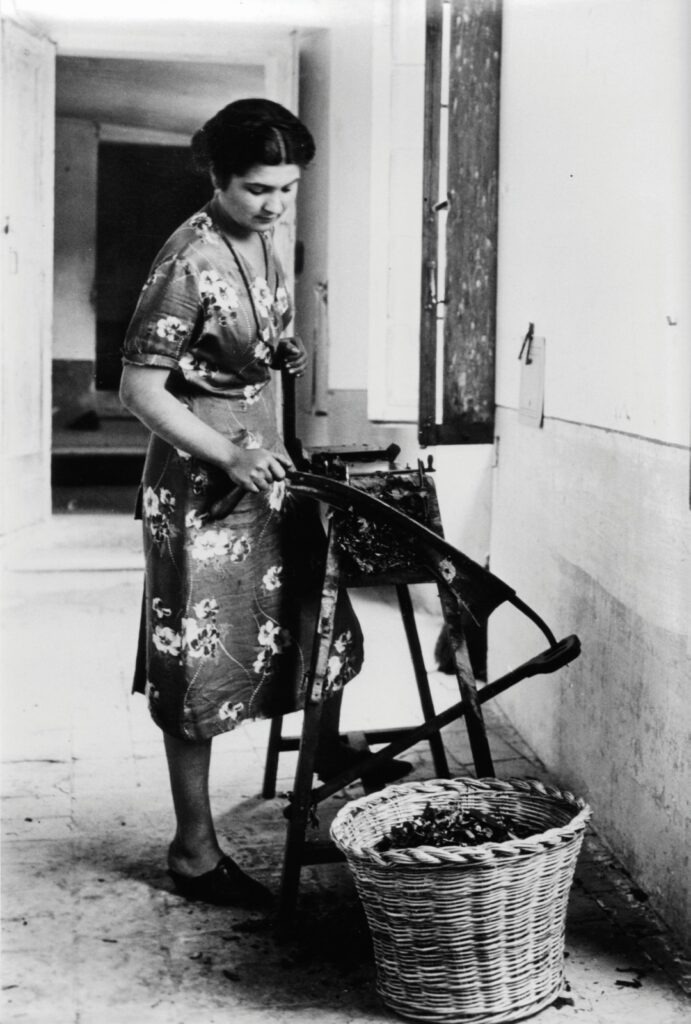
Despite the great importance of mulberries for sericulture, they were never the subject of significant scientific research or genetic selection programs. Only in the 19th century, with the shift towards the industrialisation of sericulture, did they begin to set up specialised facilities with selected varieties, spread throughout the country. Until then, extensive use was made of local genotypes. Between the 1930s and 1950s, new varieties were imported from abroad, particularly from the Far East (mainly Japan).
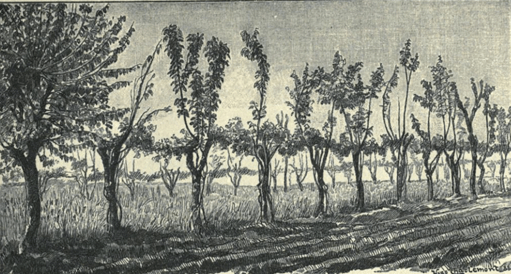
With the decline of sericulture in the course of the 20th century, the specialised plantations also disappeared, with the survival of only sporadic solitary trees and spontaneous progeny in marginal areas of the countryside.
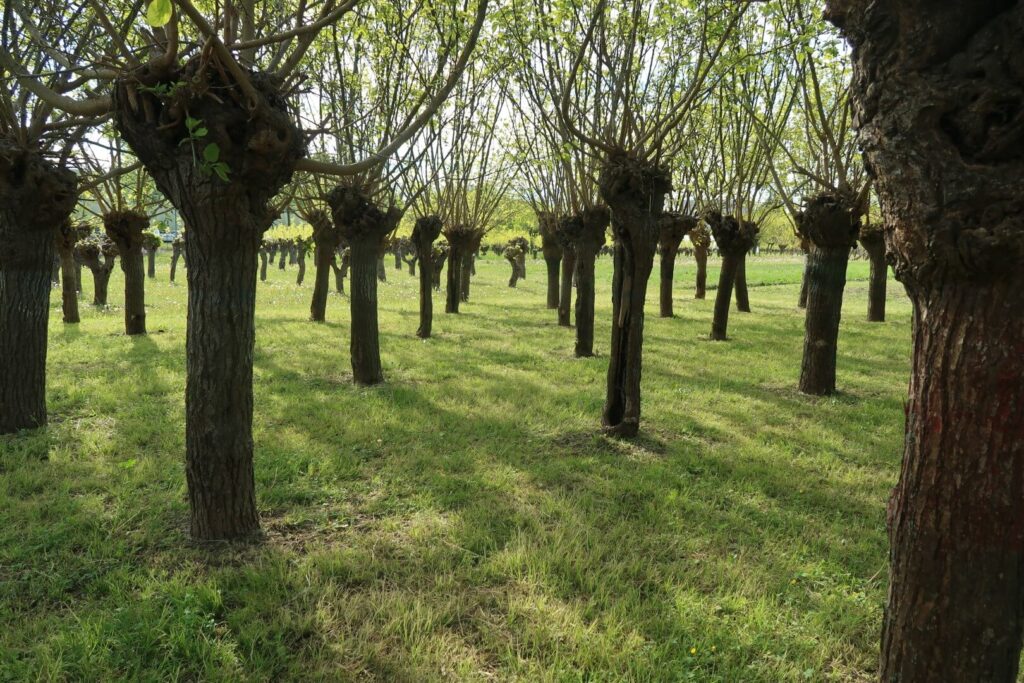
In Italy, the most relevant mulberry germplasm collection is the one belonging to the Sericulture Laboratory of CREA, the Research Centre of Agriculture and Environment located in Padua. The institute was founded in 1871 in the very centre of the town, was then moved to the suburbs in 1923. It was around that time that the first mulberry plantation was established in the new location, next to the institute, but most of the plants in the current collection were planted after 1958, when the Ascoli Piceno Sericulture Station ceased its activities, and its former director, Porzia Lorenza Lombardi, transferred its collection here, thus making the Padua Station the only research hub on silkworms and mulberries.
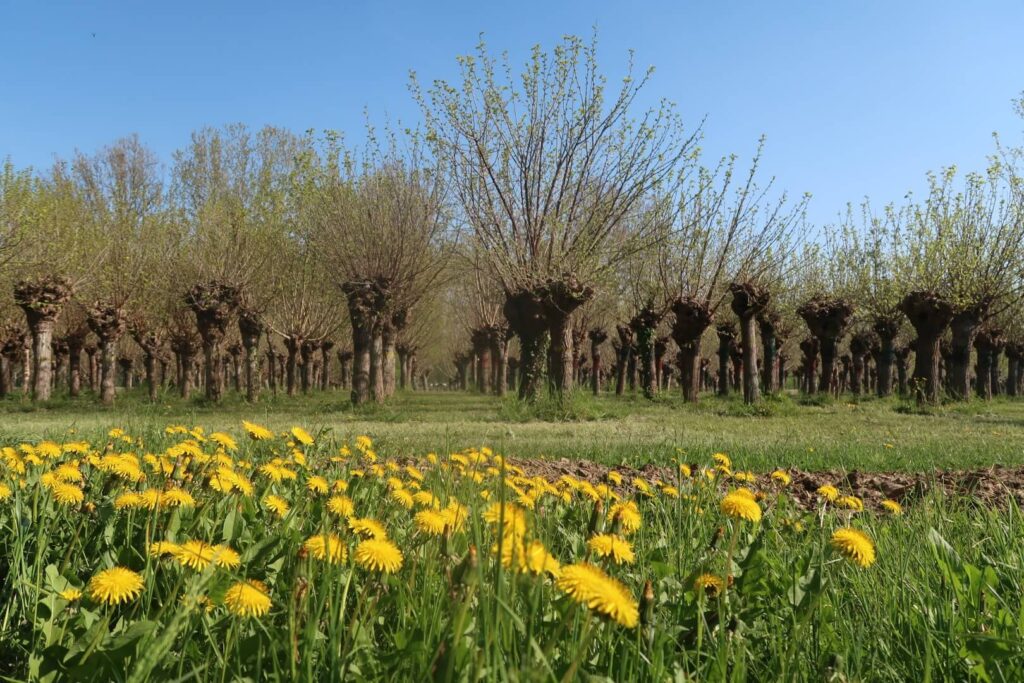
Currently, the collection extends over about two and a half hectares, conserving overall 68 varieties of mulberries, of which 21 are of Italian origin. The core collection is concentrated in a parcel where an average of 5-10 trees for each accession is maintained. The rest of the area is occupied by larger plantations, with plots of 100-500 m2, where trees intended for the production of leaves for silkworm rearing are grown. The most widely cultivated varieties (> 20 trees) are 'Florio', 'Morettiana', 'Kokusou 20', 'Kokusou 21', 'Ichinose', 'Arancina', 'Limoncina', 'Restelli'.
Initially, the creators of the collection were concerned with preserving varieties belonging to all the then known major species of Morus, and so the following species were represented: M. alba (L.), M. nigra (L.), M. multicaulis (Perr.), M. latifolia (Poir.), M. bombycis (Koidz), M. kagayamae (Koidz). However, according to the most recent studies, which employ molecular methods for phylogenetic reconstruction (Zeng et al. 2015), it can be said that all accessions actually fall within the scope of M. alba, M. nigra and M. rubra.
The plants cultivated in the collection plot are grown in a vase shape, which is the most suitable form for obtaining indications on the natural behaviour of the different varieties. The plants are not irrigated, and pruning is generally carried out at the end of winter or between spring and the beginning of summer. Organic fertilisation is the only one practised, while weeds are mechanically controlled.
During the period 2020-2023, some plots with old mulberries were uprooted, to be gradually replanted with young plants in order to refresh the collection. In 2023, after a suitable resting period for the soil, the first replanting began. In the new collection, the number of plants conserved per accession increased from 5 to 10. Apart from the known varieties, a space is dedicated to host trees found in the territory, cloned from centuries-old trees, in an effort to reconstruct a genetic heritage based on ancient populations, with a view to improving plantations in terms of resilience to climate change and variability of leaf quality, even for applications other than silkworm rearing.
Development of mulberry germplasm resources in Italy
Documented activities of mulberry genetic improvement are not known in Italy at least until the eighteenth century. For a long time, farmers predominantly multiplied the mulberry by seed, believing that this would result in more robust and more productive plants, and over time, this led to the differentiation of local populations of ‘wild mulberry’ (‘Selvatico’ in Italian). Grafting was also used to multiply certain prized lines or those that could hardly be propagated by seed, and even for these, distinct populations were formed at a local or regional level.
Only towards the end of the eighteenth and the beginning of the nineteenth century did they begin to introduce new varieties, mostly imported from abroad. This was due to the need to renew the genetic basis of the plantations because of the incidence of new diseases and parasites that affected the mulberry, and on the other hand, to create specialised mulberry orchards to follow the trend towards the industrialisation of sericulture.
The most extensive and oldest list of varieties is that reported by Jacopo Alberti in 1773, which encloses 22 varieties of white mulberry. Shortly thereafter, they began to import and study exotic varieties, which include the ‘Morettiana’ mulberry, obtained in 1780 in Milan from seeds coming from India, while the importation of the “Filippine” variety, imported from the Philippines and which had very wide distribution, dates back to 1825. Another variety to mention is the ‘Cattaneo’, released in 1865 and recommended for repopulating cultivations decimated by parasites. The ‘Restelli’ variety dates back to the early 1900s, introduced to combat infestations of Pseudaulacaspis pentagona.
In general, in these years, the selection criteria were based essentially on productivity, which also depended on disease resistance, and on the quality of the leaf, considered essential for the production of quality silk. In more recent years, importance was also given to the earliness of sprouting, a sign of sericulture conducted with planning and specialisation criteria.
After the decline of sericulture in the course of the 20th century, in Italy, there were no more significant genetic improvement activities concerning the mulberry tree. At the Padua Station, the mulberry has been essentially seen as a forage tree for silkworm rearing, and it has never been the subject of dedicated research activities, apart from agronomic experiments, targeting cultivation and propagation techniques rather than the improvement of the genetic basis.
However, an activity has been initiated to recover genotypes widespread across the national territory, through territory exploration, with the goal of expanding the genetic base of the collection, and mainly aimed at reconstituting populations particularly adapted to pedoclimatic conditions. For this reason, particular attention has been paid to the recovery of clones obtained from centuries-old specimens, which, precisely because of this characteristic, present high probabilities of adaptation to climate variations and environmental stresses.