History of the development of mulberry germplasm resources in Spain
SPAIN
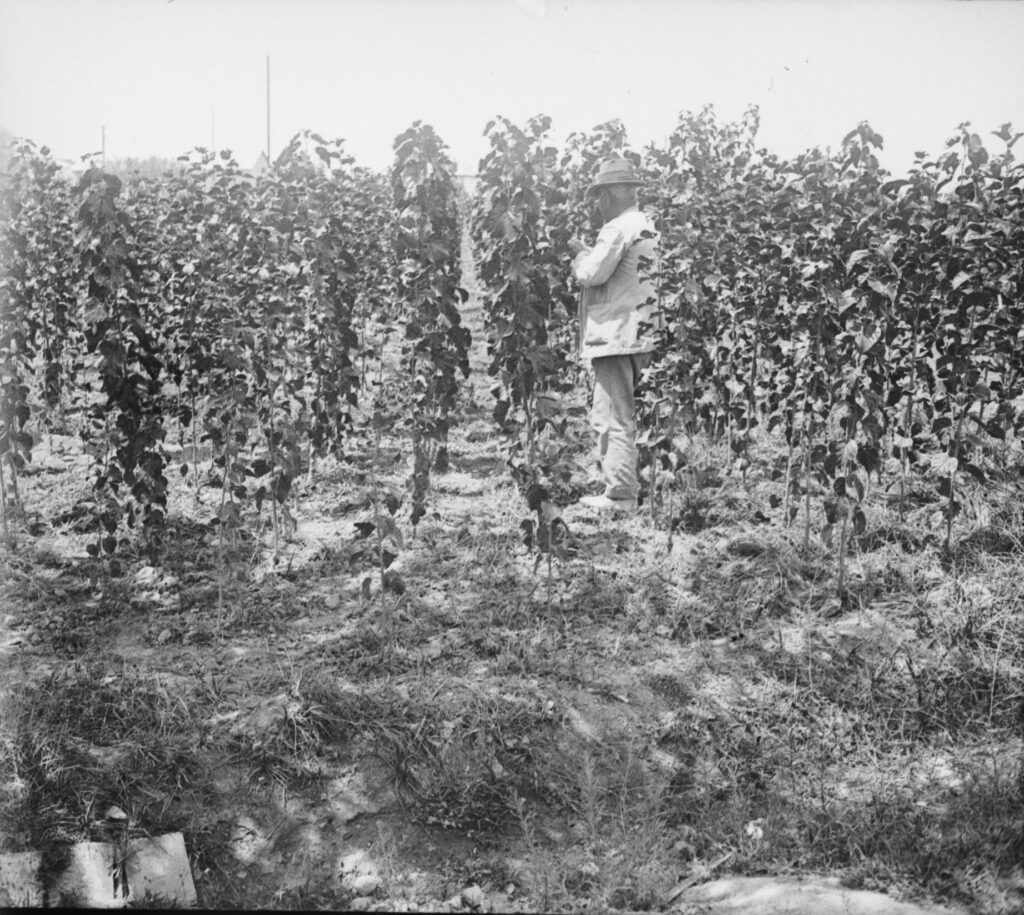
The beginnings of sericulture during the Arab rule were carried out by feeding the silkworms with mulberry leaves of moral or black mulberry, Morus nigra. The progressive spread of sericulture to the rest of the country led to the cultivation of this species. In the 16th century, however, the white mulberry Morus alba began to be cultivated in Valencia and Murcia. This has a more tender and palatable leaf for the silkworms, and it is more nutritious. As a result, it produces better quality silk. The harder-leaved Morus nigra, on the other hand, is a very resistant species that is well adapted to the altitude and aridity of the mountainous region of Las Alpujarras in Granada where it was grown. This led to a conflict, as the silk growers of the Alpujarras region, of Moorish origin (Muslims who converted to Christianity after the conquest of Granada in 1492), clung to the cultivation of the moral, as they considered its quality to be superior. The Christian authorities also defended the use of moral against the mulberry, issuing decrees banning it and ordering its uprooting. This led to the so-called "mulberry conflict", which lasted throughout the century. In reality, however, this conflict over the quality of the silk was a measure to protect Granada silk from competition from cheaper, higher quality silk from Murcia and Valencia. Eventually, the cultivation of Morus alba was imposed and Morus nigra became marginal, being cultivated only on the island of La Palma in the Canary Islands until now.
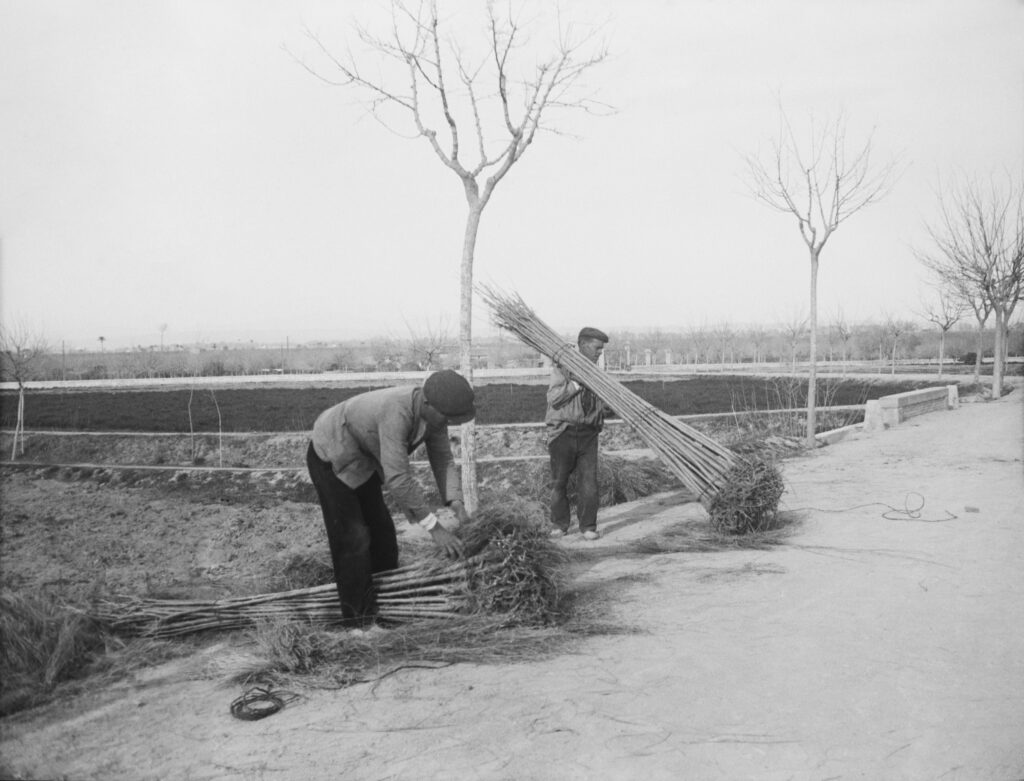
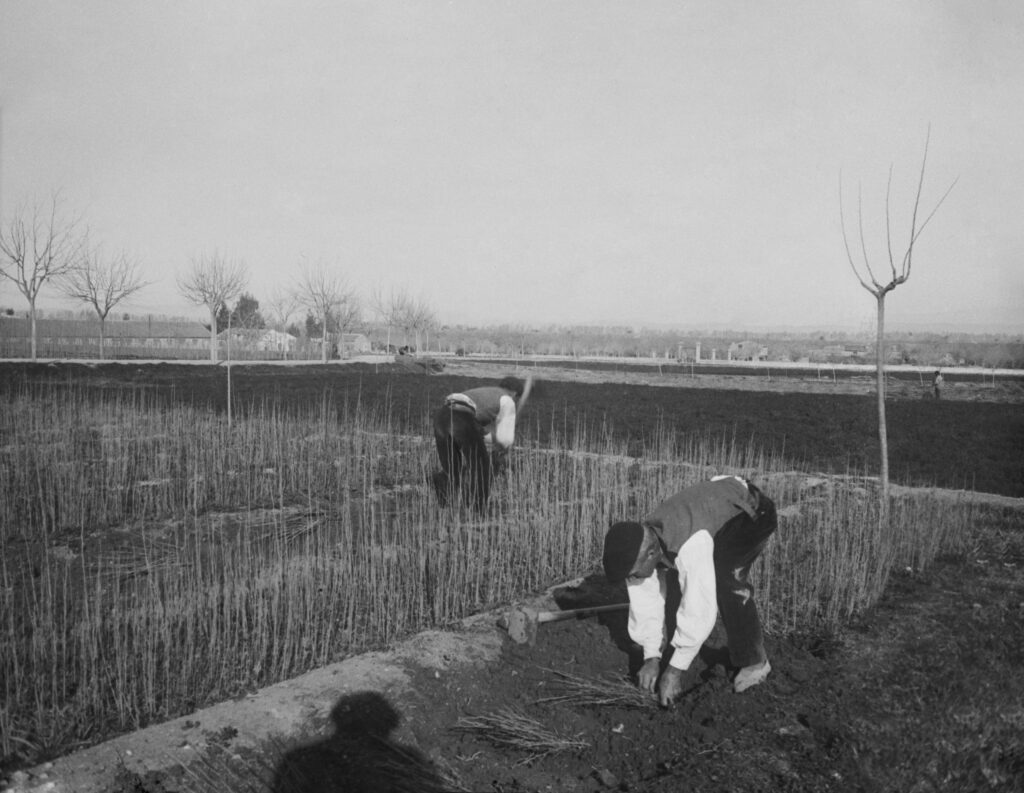
We do not know exactly which varieties of mulberry were cultivated in the distant past. Over time, however, two types of mulberry trees have been selected as native to Spain. One is the 'Valenciana' type, predominant in Valencia, which is not a single genotype but a family of genotypes with different characteristics ('Valenciana curly', 'Valenciana early'). Another type that predominates in Murcia is the ‘Cristiana’, very palatable and adapted to semi-arid conditions. After the creation of the Sericulture Station, these two types and their hybrids spread all over Spain, as one of its tasks was to maintain nurseries and distribute free seedlings to all growers who requested them. During decades, 20,000 seedlings a year were distributed.
Regarding the silkworm breeds used in ancient times, we can only mention as indigenous the race ‘Sierra Morena’, of yellow silk, traditional in the south of the country. However, almost all old breeds were progressively displaced by new Japanese high-yield breeds introduced and promoted by the Sericulture Station in the middle of the 20th century.